Your cart is currently empty!
Crossing the Line: ICE and Their Protesters Using Technology for Good and Bad

Technology is a powerful tool — it can help us locate lost keys, monitor shipments, or find a missing pet. But the same tools that make life easier can also be misused, sometimes crossing the line from convenience into harassment. This is especially true for BLE-based tracking tags like Apple AirTag, Samsung SmartTag, and Tile, which operate in the unlicensed ISM Bluetooth Low Energy band. While these devices are designed to help users track their belongings, in certain situations they can be misapplied in ways that endanger privacy and safety.
For U.S. Immigration & Customs Enforcement (ICE) agents, as well as other law enforcement personnel, the misuse of BLE tags can have serious consequences. While peaceful protest remains a vital mechanism for civic engagement, attaching tracking tags to vehicles or personal property without consent crosses a line — turning technology meant for good into a tool that can invade privacy and even threaten safety.
In December of 2025, The House Committee on Homeland Security asked Google and Apple to remove a controversial app from their app stores called ICEBlock. The app was being used to monitor U.S. Immigration and Customs Enforcement agents who claimed, that it risks “jeopardizing the safety of DHS personnel.” by allowing users to track the movements of ICE in order to better organize protests and aid undocumented immigrants from being arrested. The app has since been removed but there are many ways to surreptitiously track the movements of others.
BLE TAGs: Effective Technology in Everyone’s Pocket
BLE tags are highly effective because they rely on a network of smartphones to detect and report their presence. With over 1.5 billion iPhones in active use worldwide, along with billions more of Android devices, these tags can operate seamlessly through apps that are standard on most mobile phones today. This universality makes them convenient for legitimate use but also increases their potential for misuse when someone intentionally places a tag on another person’s property.
When Good Technology Goes Too Far
The line between responsible use and harassment can be subtle but critical. Peaceful protest allows citizens to express their opinions, but using BLE tags to follow or monitor law enforcement personnel outside of public duties is a clear example of technology being applied in ways that cross personal boundaries. Such misuse risks not only the individual’s privacy but also the safety of their family and household.
Tools to Protect Privacy
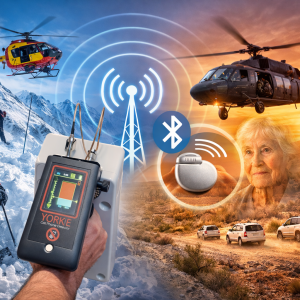
Fortunately, technology also provides solutions to safeguard privacy. BlueSleuth-Pro and BlueSleuth-Lite are specialized detection systems designed to scan for unauthorized BLE tags quickly and reliably. These tools give ICE agents and other personnel the ability to:
- Detect hidden BLE tags attached to vehicles or equipment.
- Identify signals specific to AirTags, SmartTags, and Tile devices, distinguishing them from benign electronics.
- Act quickly to remove tags before leaving a public space, protecting personal safety and privacy.
By using these tools, law enforcement personnel can ensure that their safety is not compromised while still respecting the public’s right to protest peacefully.
Striking the Right Balance
The story of “crossing the line” is not about technology itself — it’s about how it is applied. BLE tags, like many innovations, can be used for good or misused to harass or stalk. By leveraging detection systems such as BlueSleuth-Pro and BlueSleuth-Lite, ICE agents and other personnel can maintain personal security without interfering with legitimate, peaceful protest. This approach protects privacy, reinforces boundaries, and allows technology to fulfill its original purpose: helping people, not putting them at risk.
Scott Schober
CEO | Author | Speaker at Berkeley Varitronics Systems
Scott Schober presents at cybersecurity and wireless security conferences for banking, insurance, transportation, construction, telecommunications and law enforcement industries. He has overseen the development of dozens of wireless test, security, safety and cybersecurity products used to enforce a “no cell phone policy” in correctional, law enforcement, and secured government facilities. Scott regularly appears on network news programs including Fox, Bloomberg, Good Morning America, CNN, MSNBC, NPR and many more. He is the author of 'Senior Cyber', 'Cybersecurity is Everybody's Business' and 'Hacked Again', the “original hacker’s dictionary for small business owners” - Forbes Magazine.
Latest Posts





Have questions?
Berkeley sales and engineering staff will answer all of your technical, delivery and pricing questions. Contact us today.
Leave a Reply