
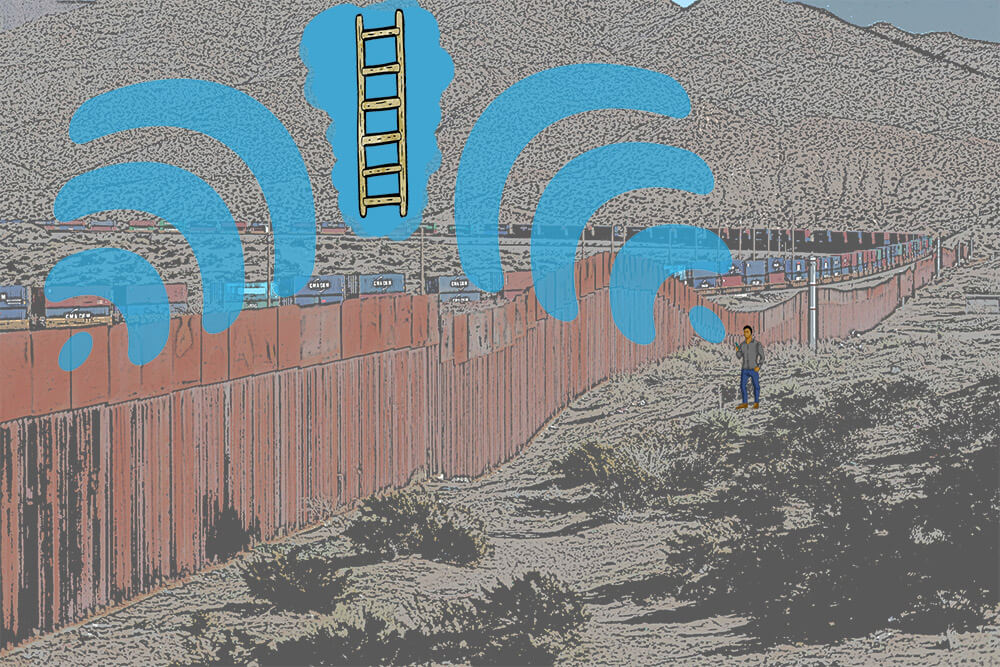
When President Trump first announced his candidacy back in 2015, he made several promises including the construction of a huge southern border wall paid for by Mexico. And even as those promises have appeared to have scaled down substantially, we still face a record-breaking government shutdown fueled by a legislative impasse over an expensive border wall. But is a concrete or steel wall enough to secure the border when criminals can still run illegal operations wirelessly through any wall?
In an effort to prevent the past catch-and-release policies of the Obama administration, President Trump has begun a series of drastic overhauls to our U.S. border protection and immigration services. Building a giant wall to deter illegals from entering the border is one thing but actually catching illegals entering or conspiring with others to enter is something completely different. Back in 2017, DHS released two memos detailing some future proposals for protecting our borders. Among the more controversial details involving some 2000 miles of giant wall to be constructed, were more typical increases to budget and staff. Some 10,000 Immigration and Customs Enforcement (ICE) officers as well as 5,000 Border Patrol agents were also slated to be recruited, trained and hired in order to begin this massive immigration overhaul. These plans have been partially gutted with everyone now focusing on the $5 billion price tag for a border wall or fence of some kind.
The border wall construction itself is said to span some 215 miles along the U.S. southern border. There is also talk of technology implemented to detect movement as anyone approaches the border wall according to DHS officials, but it’s still unclear if that tech is part of the $5 billion price tag and just how effective it can be. For instance, without wireless detection, border agents have no means to detect communications and locations of the suspects preparing to cross the borders. Such technology is vital to modern law enforcement considering the ubiquity of cellular smartphones.
The one thing that the government shutdown has clearly illustrated is that border security jobs are the most important part of border security. Furloughed TSA workers have forced security checkpoint closures in both Houston and Miami airport terminals with other security workers preparing to follow suit. The security squeeze is on so how does the U.S. government properly allocate resources to best protect its border and citizens?
Border security comes in many forms. Nearly one million travelers are granted access into a U.S. border every day. Since we cannot simply close our borders, we must train and equip our border agents effectively to identify the biggest risks and act accordingly. Border jumpers come in many different forms but most of them cross the border with 2 things: a cell phone and a contact on one or both sides of the border. When border agents can detect these communications, they can better size up the individual as a possible threat and more importantly, intercept them before they can penetrate the border and disappear forever.
No matter how this physical border wall kerfuffle plays out, border security will continue to suffer until the U.S. properly hires, trains and equips the best candidates for the job.





Leave a Reply